Alura2026
Pillar Pages
How I translated an SEO request into a visual experience that became a benchmark of authority for users and for Google's algorithm.
- My role
- Product Designer (UX/UI), responsible for the visual and experience solution
- Client
- Alura, the largest tech education platform in Brazil
- Teams
- SEO + Product
- Scope
- UX/UI Design · SEO Strategy · Alura Design System · Pillar Pages · B2C
- UX Design
- UI Design
- SEO
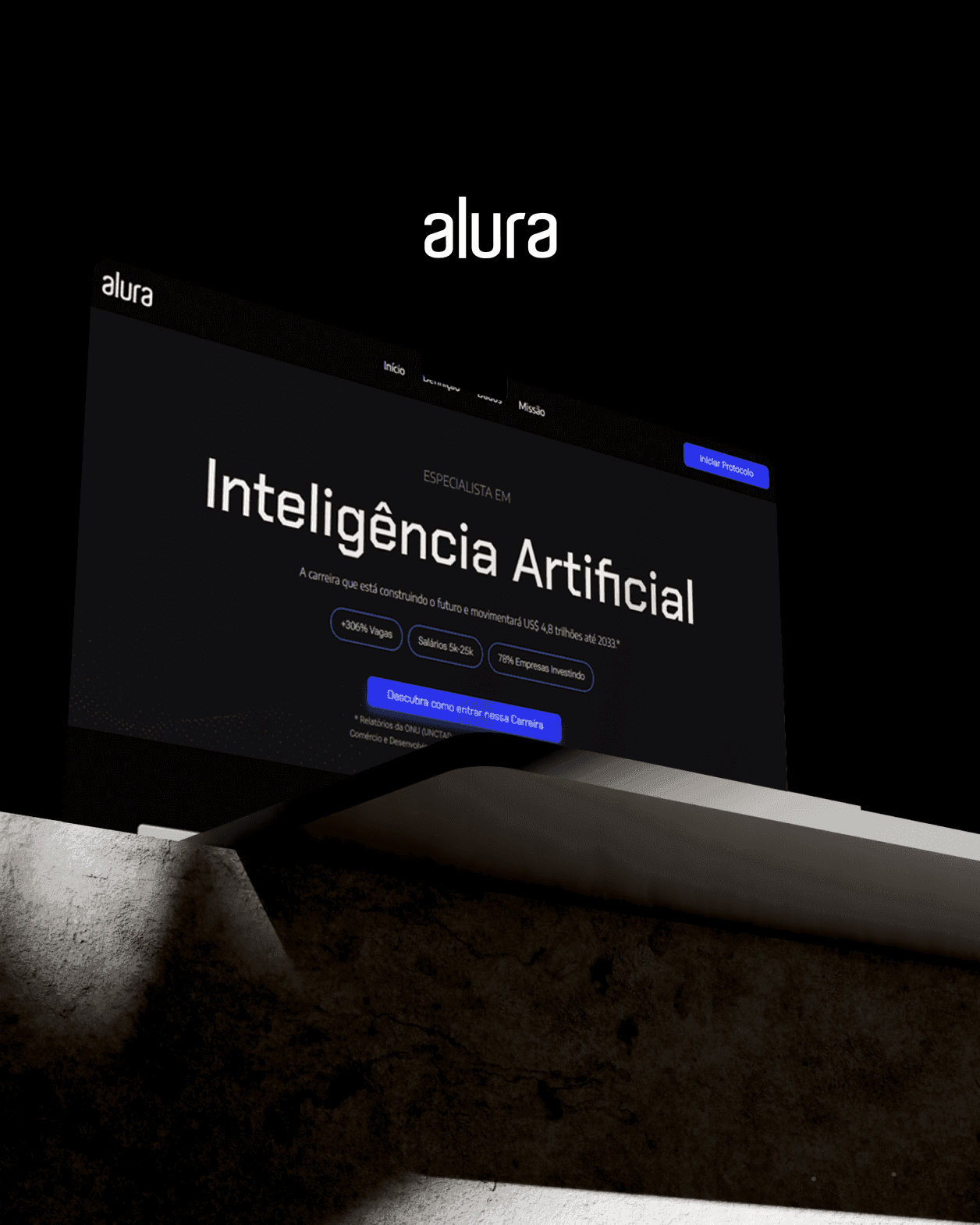
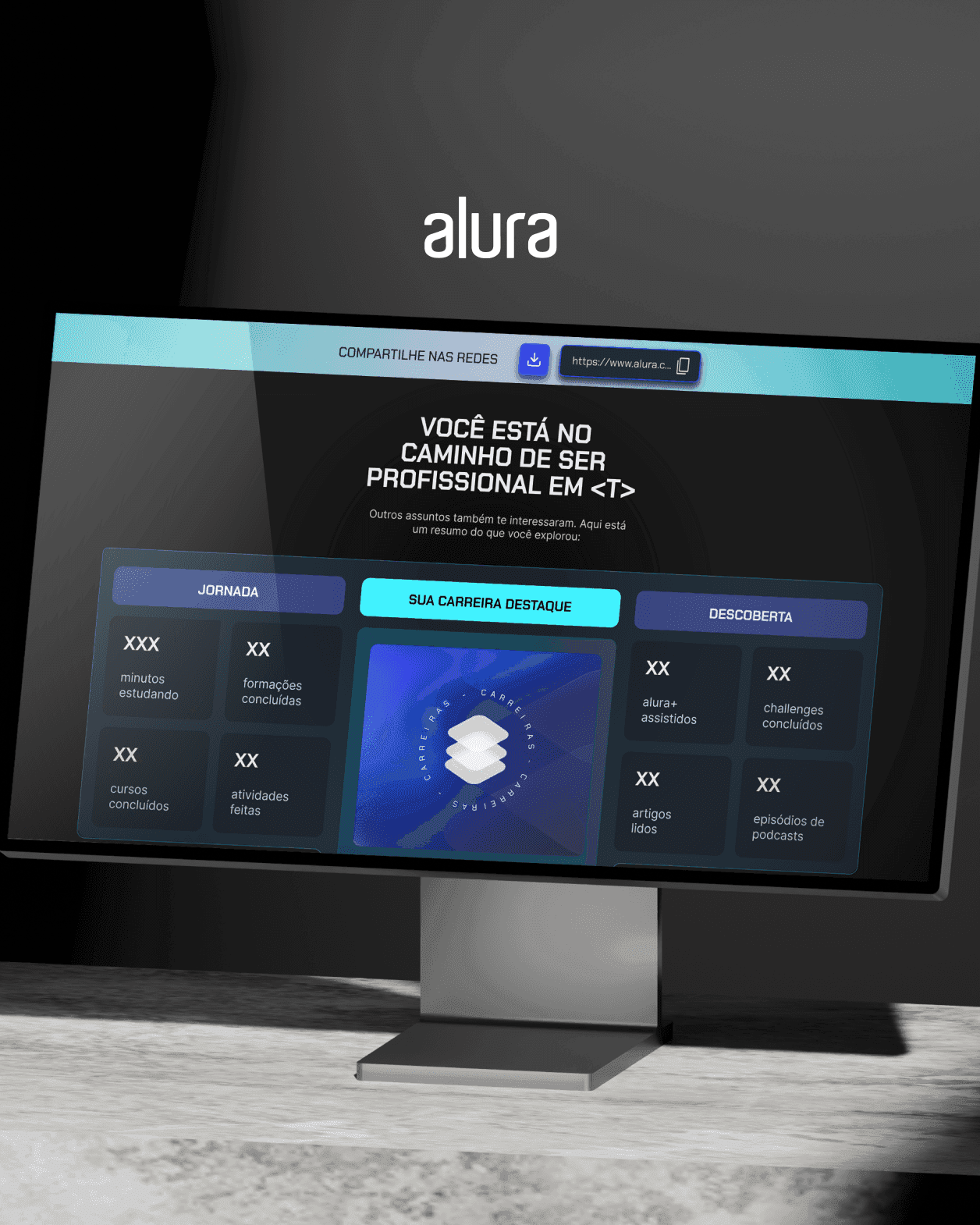
The SEO team wanted these pages to be an authority source on AI: the reference for both users and search engines.
The request
The goal was to speed up ranking for career pages using a completely new page format.
SEO needed a structure that could serve as an authority source both for people looking for guidance and for search engines. The mission: map out a step-by-step path for anyone starting a career in tech.
The copy arrived finished. I treated that as a starting point rather than a constraint: UX/UI organised the hierarchy, the reading rhythm and the conversion layers.
Design decisions
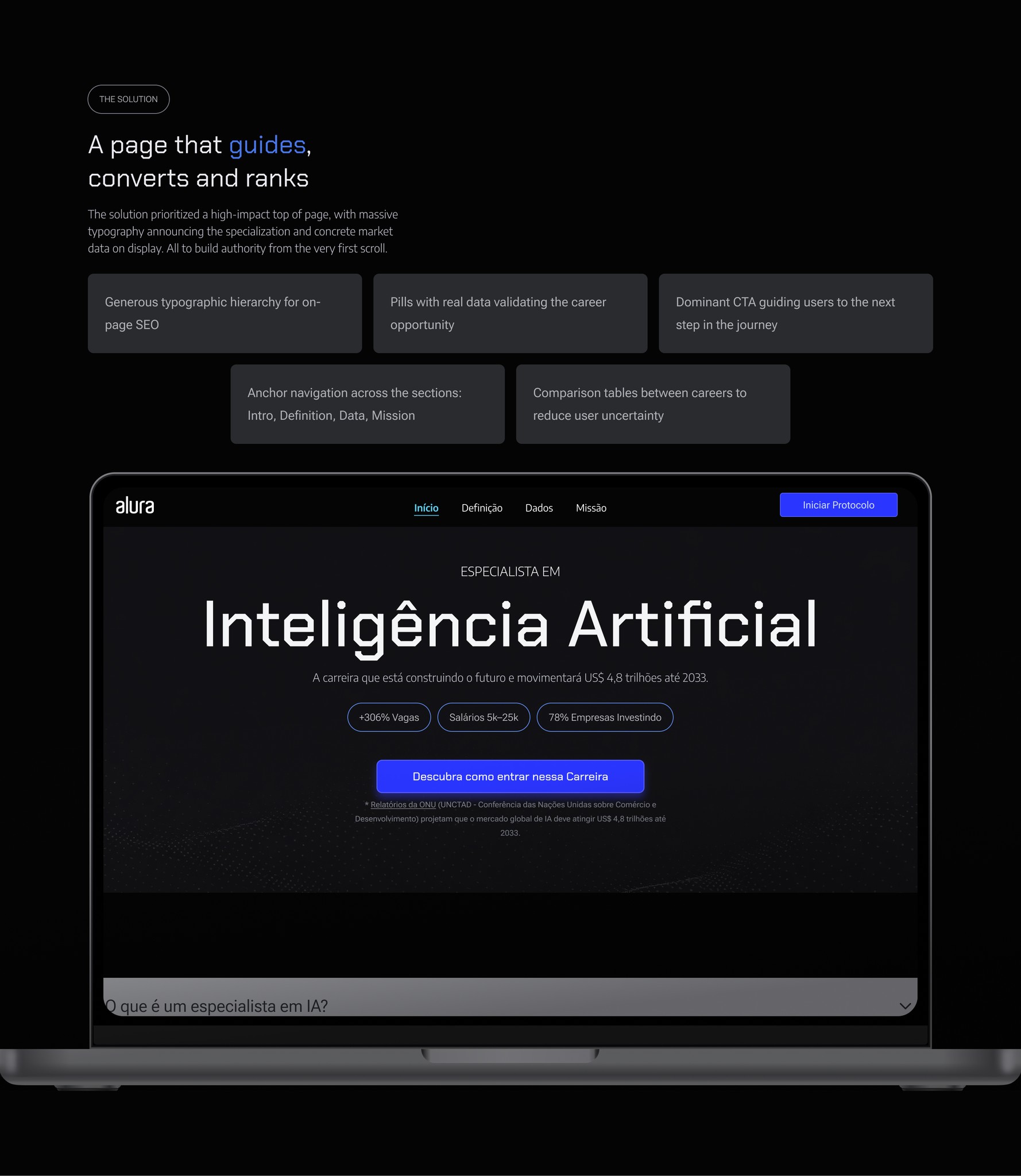
The top of the page was designed for high impact. Very large typography announces the specialisation, and concrete market figures come up front, so authority is established from the very first scroll.
- Typographic hierarchy: a generous hierarchy that also supports on-page SEO.
- Data pills: real figures that validate the career opportunity.
- Dominant CTA: steers people towards the next step of their journey.
- Anchor navigation: quick links across Intro, Definition, Data and Mission.
- Career comparison tables: reduce uncertainty when choosing a path.
The page
A page that guides, converts and ranks.

Impact
- 1,417 impressions for the Pillar Page in its first month
- 128 impressions for a traditional career page
The comparison sets the average impressions of a typical traditional career page against the new Pillar Page during its first month live.
What the format changed
- Authority in AI: the pages became an authority source and a reference for users and search engines.
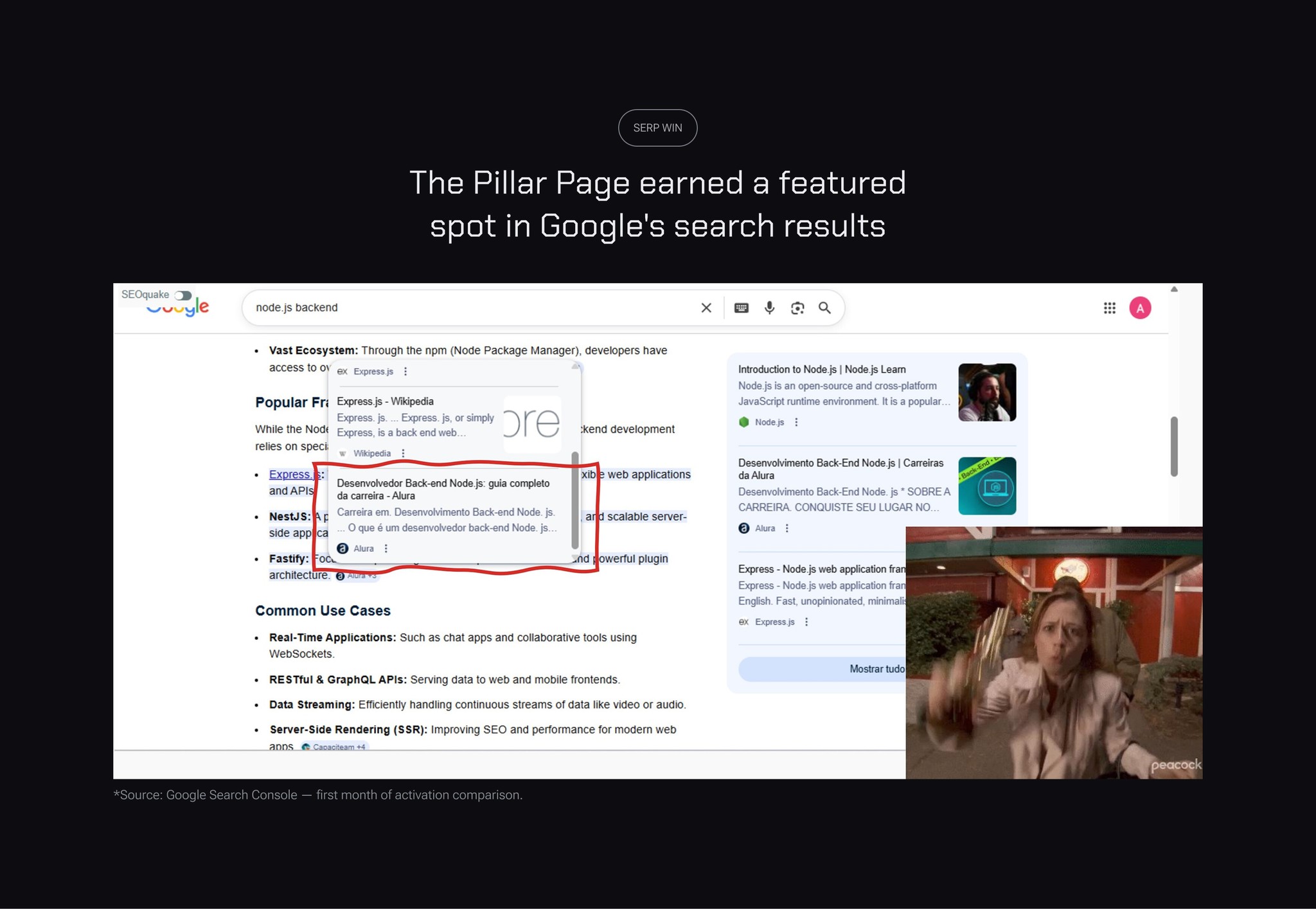
- Accelerated ranking: the pages started showing up on Google for strategic terms, such as "node.js backend".
- A path into tech: a clear, informative route for people entering tech careers.
Design isn't decoration… it's performance infrastructure.
Reflection
- Cross-functional collaboration: finished copy is a starting point, not a limitation. UX/UI shapes hierarchy, reading rhythm and conversion layers.
- SEO and design go hand in hand: semantic structure, visual hierarchy and reading time are design choices that directly affect organic ranking.